Felbatol (felbamate) for Lennox-Gastaut syndrome
 Fact-checked by
What is Felbatol for Lennox-Gastaut syndrome?
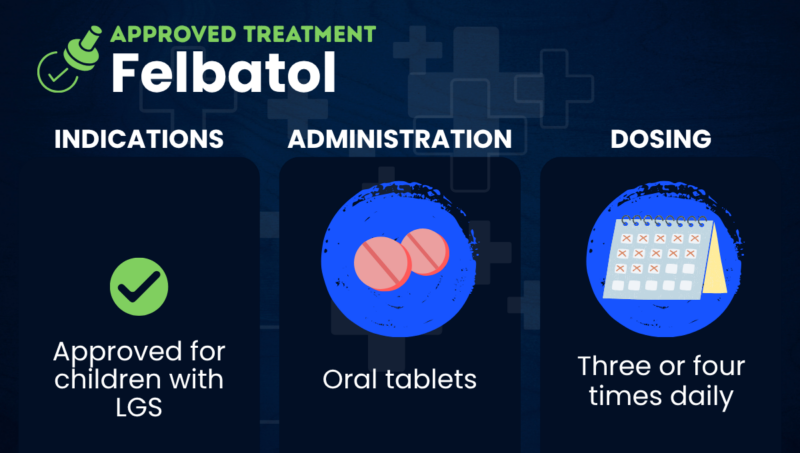
Felbatol (felbamate) is an approved oral therapy that’s used as an add-on to treat seizures in children with Lennox-Gastaut syndrome (LGS) after other treatments have failed.
The mechanisms of Felbatol are not well understood, but it is thought, in part, to work by reducing the signaling of a brain chemical called glutamate, which contributes to the excessive nerve cell firing that’s linked to seizures.
Felbatol is also used in the U.S. for adults with other types of epilepsy. The brand-name medication comes as oral tablets and is sold in the country by Viatris. Generic versions are also available in oral tablet and oral suspension formulations. The medication is sold in some European countries under the brand name Taloxa.
Therapy snapshot
| Brand name | Felbatol |
| Chemical name | Felbamate |
| Usage | Used as an add-on to treat seizures in children with LGS |
| Administration | Oral tablets; generics also available as oral suspension |
Who with LGS can take Felbatol?
In the U.S., Felbatol is approved as an add-on therapy to treat partial and generalized seizures in children with LGS. It can also be used alone or as an add-on therapy for adults with epilepsy who experience partial seizures, with and without generalization.
However, because of the risk of very serious and life-threatening side effects, the medication should not be used as a first-line therapy. It is recommended only for patients who respond inadequately to alternative treatments and whose epilepsy is so severe that the risk of life-threatening side effects is deemed acceptable. These risks, listed in a boxed warning on the therapy’s label, include:
- aplastic anemia, when the bone marrow stops making enough new blood cells
- acute liver failure, which could require a liver transplant
Patients and families must be fully advised of these risks and provide written acknowledgment of them before Felbatol can be used.
Felbatol is contraindicated, or should not be used, by people with a history of:
- immune reactions (hypersensitivity) to Felbatol, its ingredients, or other medications in its class (carbamates)
- blood or bone marrow disorders
- liver problems
How is Felbatol administered in LGS?
Felbatol is available as oral tablets. Generics may be administered as oral tablets or a liquid suspension.
The recommended starting dose for children ages 2-14 is 15 mg/kg daily, split into three or four smaller doses. This can be gradually increased up to 45 mg/kg daily. The dose of any other antiepileptic medications will simultaneously be gradually reduced to avoid side effects.
Felbatol dosing may need to be adjusted in people with kidney problems.
Felbatol in LGS clinical trials
Felbatol’s approval for children with LGS was supported by a clinical trial involving 73 people with the condition, ages 4-36, whose seizures were not adequately controlled with standard therapies.
The data showed that Felbatol was associated with significant reductions in total seizure frequency compared with a placebo, as well as reductions in certain types of severe seizures. Caregiver-reported evaluations of quality of life also significantly favored Felbatol.
Felbatol side effects
Common side effects of Felbatol in children receiving add-on treatment include:
- appetite loss
- vomiting
- difficulty sleeping
- headache
- drowsiness
People using Felbatol need to be carefully monitored for aplastic anemia and liver injury. It is not known whether the dose, length of treatment, or the use of other antiseizure medications influences the risk of these complications.
Blood cell counts and liver enzyme levels should be evaluated before treatment starts and at regular intervals throughout treatment; however, blood tests may not detect problems before substantial damage has set in. Doctors will advise patients on the potential signs of these complications, and Felbatol should be discontinued if they occur.
Felbatol also comes with warnings that it could increase the likelihood of suicidal thoughts or behaviors, for which patients should be carefully monitored.
Interactions can occur with the use of other antiseizure medications, so families should always alert their healthcare providers about any other treatments being given.
Antiseizure medications like Felbatol should not be stopped suddenly because of the possibility that seizure frequency could increase. Instead, the dose should be gradually reduced.
Lennox-Gastaut Syndrome News is strictly a news and information website about the disease. It does not provide medical advice, diagnosis, or treatment. This content is not intended to be a substitute for professional medical advice, diagnosis, or treatment. Always seek the advice of your physician or other qualified health provider with any questions you may have regarding a medical condition. Never disregard professional medical advice or delay in seeking it because of something you have read on this website.