EEG headband tracks LGS kids’ sleep disturbances at home
Study finds caregivers able to operate system to collect data
Written by |
Caregivers were able to monitor childrens' sleep using an EEG headband.
Children with Lennox-Gastaut syndrome (LGS) experience substantial sleep disruptions, which caregivers can track at home with an electroencephalogram (EEG) headband, a study found.
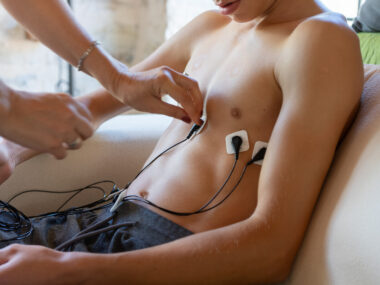
The HEADFIRST study showed that the Waveband device, which uses four sensors placed over the front and back of the head to record the brain’s electrical activity during sleep, was well tolerated by children with LGS and yielded usable data across multiple nights.
Recordings revealed that children with LGS spent less time in rapid eye movement (REM) sleep — the stage of sleep when brain activity is high and most vivid dreaming occurs — woke up more often during the night, and completed fewer normal sleep cycles than their healthy siblings.
“To our knowledge, this is the first study examining multi-night sleep EEG recordings collected by caregivers,” the researchers wrote. “Ambulatory EEG-based systems may aid in further understanding” sleep problems in people living with the severe form of epilepsy without requiring overnight hospital stays, they added.
The study, “At-home EEG-based sleep monitoring in people living with Lennox-Gastaut syndrome: The HEADFIRST study,” was published in Epilepsy & Behavior.

Seizures and sleep
LGS usually begins in early childhood. LGS symptoms include multiple types of seizures that are often difficult to control, along with developmental issues and persistent sleep problems. Disrupted sleep may increase abnormal brain activity linked to seizures, which, in turn, can further interfere with sleep.
Because sleep is essential for learning, memory, attention, and emotional regulation, these disturbances may interfere with daytime functioning and quality of life for children with LGS and their families.
Yet relatively little is known about how sleep is affected in LGS. Most studies have relied on caregiver reports, which cannot objectively measure changes in sleep patterns or brain activity. Overnight sleep studies in specialized labs can present logistical challenges for people living with LGS and their caregivers and may not fully capture how sleep changes from night to night.
Researchers conducted the HEADFIRST study to evaluate whether caregivers could use a wearable EEG headband at home to collect reliable sleep and brain activity data over multiple nights. They also wanted to determine whether children would tolerate the device and whether it could provide new insights into sleep disturbances in children with LGS.
The study, done in collaboration with the LGS Foundation, enrolled 12 children and adolescents with LGS, ages 5 to 18, and 10 healthy siblings who served as controls. Caregivers received remote training on how to place and use the EEG headband to record the childrens’ sleep over two five-night periods separated by a two-night break
Data collected included EEG recordings, automatically generated sleep-stage information, and caregiver-completed questionnaires assessing sleep impairment, including the Patient-Reported Outcomes Measurement Information System (PROMIS) Parent-Reported Sleep Impairment questionnaire.
All caregivers were able to use the device independently. They successfully recorded at least five nights of sleep, including two or more consecutive nights, for 10 participants with LGS (83%) and nine healthy siblings (90%).
On average, caregivers collected 55 hours of recordings per participant with LGS and 57 hours for healthy siblings, suggesting the headband was similarly tolerated during prolonged overnight use.
EEG recordings detected characteristic seizure-related brain activity during non-REM sleep, a stage of sleep when brain activity is usually slower, in nine of the 10 participants with LGS, but in none of the healthy siblings.
Children with LGS spent significantly more time awake after initially falling asleep: a mean of 43 minutes, compared with 18 minutes for their healthy siblings. Mean REM sleep duration was about half that of the control group (51.3 minutes vs. 100.6 minutes). Children with LGS also completed fewer sleep cycles, with a mean of 2.6 per night, compared with 4.6 for their healthy siblings.
Sleep changes varied from night to night, particularly in children with LGS, supporting the value of EEG monitoring over multiple nights rather than relying on a single, overnight sleep study.
Despite the objective differences detected by the EEG headband, scores on the PROMIS Parent-Reported Sleep Impairment questionnaire did not differ significantly between children with LGS and their healthy siblings, suggesting that at-home EEG monitoring may detect changes that are difficult to recognize through caregiver observation alone.
Although the headband uses fewer electrodes than a standard EEG, the researchers concluded its “simplified use” could offer a promising advance to monitor sleep and epilepsy “in a natural setting.” Future studies should confirm the EGG headband’s ability to detect seizure-related brain activity, they said.