Lennox-Gastaut syndrome symptoms
 Fact-checked by
 Lennox-Gastaut syndrome (LGS) symptoms include multiple types of seizures, intellectual disability, behavioral problems, movement problems, and sleep disorders. Various other complications can also mark the condition.
LGS is a rare childhood epilepsy that usually manifests between the ages of 2 and 5. It can cause frequent seizures and substantial developmental delays. These delays, as well as accompanying LGS behavioral and cognitive symptoms, may be related to the underlying causes of seizures and to the seizures themselves.
Identifying different seizure types and other symptoms is an essential part of LGS diagnosis.
Common seizure types
Among common LGS seizure types are:
- tonic seizures
- atonic seizures
- atypical absence seizures
Other types of seizures, such as tonic-clonic, myoclonic, and focal impaired awareness seizures may also occur, but are less common. To receive an LGS diagnosis, a child must have tonic seizures, as well as at least one other seizure type, and meet other criteria.
If seizures are prolonged or occur in quick succession, they can cause a medical emergency known as status epilepticus, which requires urgent attention.
Tonic seizures
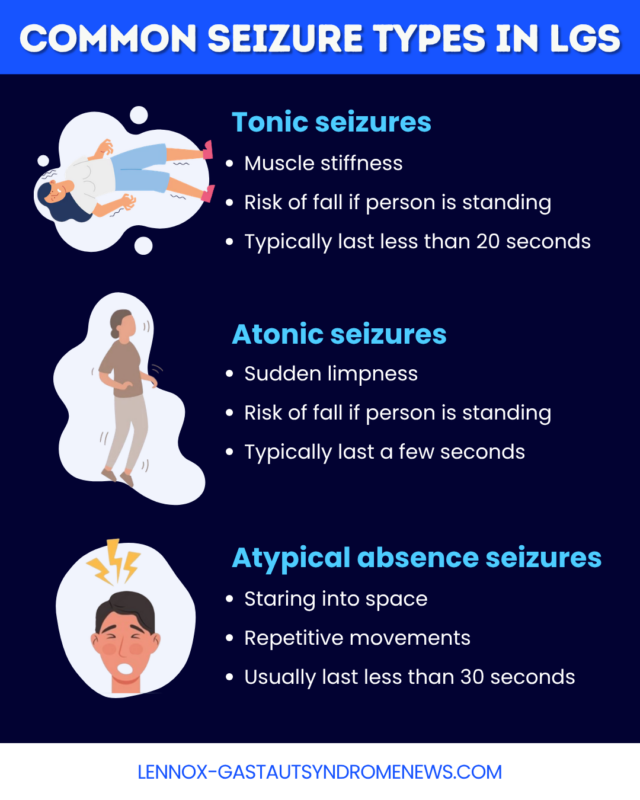
Tonic seizures are a hallmark of LGS and the most common type seen in people with the condition. They increase muscle tension, leading to muscle stiffness throughout the body. Tonic seizures typically last less than 20 seconds, but can last up to about a minute.
While most tonic seizures occur during sleep, they also can happen while a person is awake. If individuals are standing when a tonic seizure begins, they may fall, which can lead to injury.
Atonic seizures
Contrarily to tonic seizures, atonic seizures lead to a sudden decrease in muscle tone, causing limpness. They may also cause a partial loss of consciousness, and usually last for a few seconds.
Like tonic seizures, atonic seizures can cause someone to fall, posing a risk of injury. As the body becomes limp, the head may fall forward, and a person may drop things or suddenly fall to the ground. For this reason, atonic seizures are sometimes called drop seizures.
Atypical absence seizures
During an atypical absence seizure, people with LGS have a blank stare and reduced responsiveness. They may also perform repetitive movements, often involving the eyes, mouth, or hands. These signs may be relatively subtle, making atypical absence seizures potentially difficult to identify.
Atypical absence seizures can begin and end gradually, but do not usually last more than about 30 seconds. The fall risk is typically lower than for tonic or atonic seizures, though falls can still occur.
Less common seizure types
Some people with LGS experience tonic-clonic seizures, which begin like a tonic seizure, with all the muscles stiffening. This is followed by a second convulsive phase, during which the arms and legs jerk rhythmically. Tonic-clonic seizures may last up to a couple of minutes.
Myoclonic seizures, which cause brief muscle jerks, are also sometimes seen in people with LGS. These are brief, lasting a couple of seconds, though several may occur within a short time period.
Focal impaired awareness seizures, which typically begin with staring and altered awareness, can also occur in people with LGS. These seizures usually last several minutes, are followed by a period of confusion, and may evolve into generalized tonic-clonic seizures.
Status epilepticus
About two-thirds of people with LGS will experience status epilepticus during their lives. This happens when one seizure lasts longer than five minutes, or multiple seizures occur within 30 minutes without full recovery of consciousness between them.
Status epilepticus is an emergency and requires immediate treatment with a rescue therapy to quickly stop seizures. People with LGS and their caregivers should have an action plan to immediately pu in place if status epilepticus occurs.
Non-seizure symptoms
In LGS, seizures can directly contribute to developmental delays and non-seizure symptoms. The underlying causes of LGS, such as genetic disorders and brain injuries, may also contribute.
Non-seizure symptoms in LGS can include:
- intellectual disabilities, such as memory and learning difficulties
- behavioral problems, such as aggression, inattention, and hyperactivity
- motor problems, such as balance and coordination issues, and difficulty swallowing and feeding
- sleep problems, such as difficulty falling or staying asleep
Many children show signs of developmental delays before seizures begin, though these tend to worsen following the onset of seizures. Some people with LGS also have autism spectrum disorder, which can contribute to behavioral problems.
People living with LGS also have a higher risk of experiencing several complications, including:
- accidental falls and injuries due to seizures
- infections due to reduced mobility and frequent seizures
- sudden unexpected death in epilepsy or SUDEP
How symptoms change over time
Identifying changes over time is an important part of LGS symptom management. Although the disease course can vary, both seizure and non-seizure symptoms typically evolve with age.
Young children with LGS have seizures frequently — typically several times a week, with most having them daily. Tonic, atonic, and atypical absence seizures are the most common initial types of seizures. About 80%-90% of children have seizures that persist into adulthood, but seizure types and features can change.
During adolescence and adulthood, seizures may become less frequent, particularly during the day, and tonic seizures are often limited to sleep. However, the frequency of drop seizures may increase.
Intellectual disability and cognitive impairment often become more apparent over time, however, particularly in the first five years following symptom onset. Motor problems typically also develop later.
LGS may also develop from other types of epilepsy in children, such as infantile seizure conditions. During this transition, seizure and non-seizure symptoms may shift.
When to seek medical help
Caregivers and families should seek urgent medical attention if:
- a child experiences a seizure for the first time
- a seizure is noticeably different than past seizures
- a seizure lasts longer than five minutes
- several seizures occur in quick succession without complete recovery of consciousness between them
- injuries have occurred as a result of a seizure
- a child has difficulty breathing or appears to be choking
Close seizure monitoring is important for children who have experienced seizures in the past. This can help identify possible seizure triggers and reveal the presence of tonic seizures during sleep, which can assist in LGS diagnosis. It may also allow clinicians to provide individualized seizure safety tips and help caregivers develop emergency plans.
For children who have previously been diagnosed with a type of epilepsy that can evolve into LGS, regular follow-up visits and continued testing can help detect this transition.
Lennox-Gastaut Syndrome News is strictly a news and information website about the disease. It does not provide medical advice, diagnosis, or treatment. This content is not intended to be a substitute for professional medical advice, diagnosis, or treatment. Always seek the advice of your physician or other qualified health provider with any questions you may have regarding a medical condition. Never disregard professional medical advice or delay in seeking it because of something you have read on this website.