
With LGS, we may be alone on an island, but we don’t have to be lonely
Sharing our stories can help other families feel less isolated
Written by |
Nobody dreams of hearing that their baby has a catastrophic form of epilepsy. I certainly didn’t. My daughter, Lola, was just 4 months old when she began experiencing infantile spasms. At an age when most parents are celebrating first giggles and watching their babies discover the world, I was learning about seizures, medications, electroencephalograms, and a medical vocabulary I never wanted to know.
And that was only the beginning.
Over the years, Lola received a long list of diagnoses, including Bosch‑Boonstra‑Schaaf optic atrophy syndrome, an ultrarare genetic condition, as well as multiple visual impairments, autism, intellectual and developmental disabilities, and several forms of epilepsy. In 2019, another diagnosis joined the list: Lennox‑Gastaut syndrome (LGS). If you’re familiar with the condition, you likely understand how those three words can reshape a family’s life.
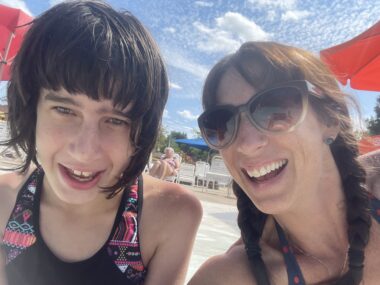
Lola and Meredith Antushevich enjoy a day at Holiday World & Splashin’ Safari in Santa Claus, Indiana, in 2024. (Photo by Meredith Antushevich-Howell)
LGS is a severe form of epilepsy involving multiple seizure types that are often resistant to treatment. But clinical descriptions don’t begin to capture what it feels like to watch your child endure seizure after seizure, wondering when the next one will come and what it might take from them. If I could trade places with Lola for even a millisecond, I would.
Here’s what I wish more people understood: Lola is so much more than her diagnoses.
She’s a teenager who loves shopping, eating practically anything she can get her hands on, and playing Justin Bieber’s “Baby” on repeat. She delights in terrorizing her younger brother, Sebastian, as only a big sister can. She thrives at the Indiana School for the Blind and Visually Impaired, surrounded by people who recognize her abilities and encourage her independence. And she’s already counting down to her next prom.
These details matter. They’re the pieces that make Lola who she is, and the very things seizures can interrupt, complicate, or steal.
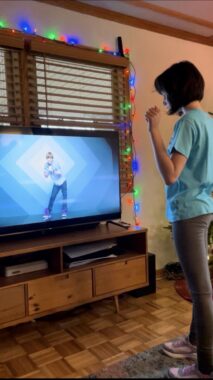
Lola watches Justin Bieber in 2024. (Photo by Meredith Antushevich-Howell)
When Lola is battling seizures, our lives can shift in an instant. Plans evaporate. Ordinary activities become obstacles. Sometimes, the only priority is getting her through the next hour safely. The fear is real and difficult to explain to someone who hasn’t lived it. There’s the exhaustion of constant monitoring, the disappointment when treatments fall short, and the uncertainty that shadows every tomorrow.
Even with support, this journey can feel incredibly lonely.
But here’s what I’ve learned: Being alone on an island doesn’t mean we have to be lonely.
Our stories matter
That’s one reason resources like Lennox‑Gastaut Syndrome News have become meaningful to me. When you’re navigating a complex, unpredictable condition, reliable information matters. I’ve turned to the site’s research updates, community stories, and personal perspectives to understand the challenges families like mine face. There’s a comfort unlike any other in reading another parent’s or caregiver’s experience and recognizing your own fears, frustrations, or hopes in their words.
The voices of other LGS families remind me that although our children and circumstances differ, many of us share similar goals: safety, effective treatment options, and opportunities for joy, independence, friendship, and a life that feels full.
There’s a well-known essay called “Welcome to Holland,” by Emily Perl Kingsley, about the unexpected journey of raising a child with a disability. I appreciate the sentiment, but I’ve always been more of a warm-weather, ocean-loving kind of gal. So, if we’re going somewhere unexpected, I’m picturing an island instead.
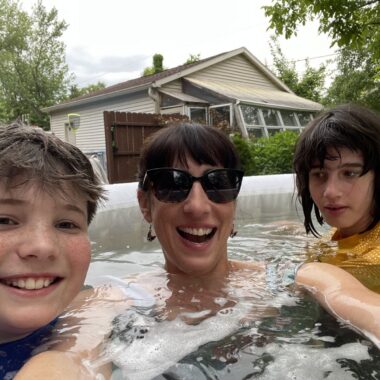
Sebastian, Meredith, and Lola relax in a hot tub in 2025. (Photo by Meredith Antushevich-Howell)
Nobody chose this island. It’s a trip none of us planned, and certainly not one we ever hoped to take. But if I have to be here, I’d rather not stand on the shore solo. I’d prefer to have someone beside me who understands the tides. And if you’ve made it this far, maybe we can navigate them together.
Hi, I’m Meredith. I’m Lola and Sebastian’s mom. I’m an advocate, a writer, and someone whose life has taken more unexpected turns than I ever imagined. Nearly 16 years into motherhood, I’m still learning, questioning, and figuring things out one day at a time. And I certainly don’t have all the answers.
What I do have are stories. Lots of them.
Incredible ones, heartbreaking ones, ridiculously funny ones, and plenty that fall somewhere in between. I’m honored to bring a little of our beautiful chaos to this community. Because our lived experiences matter. Our stories matter.
Solidarity. Now, who’s ready for a pipa?
Note: Lennox-Gastaut Syndrome News is strictly a news and information website about the disease. It does not provide medical advice, diagnosis, or treatment. This content is not intended to be a substitute for professional medical advice, diagnosis, or treatment. Always seek the advice of your physician or other qualified health provider with any questions you may have regarding a medical condition. Never disregard professional medical advice or delay in seeking it because of something you have read on this website. The opinions expressed in this column are not those of Lennox-Gastaut Syndrome News or its parent company, Bionews, and are intended to spark discussion about issues pertaining to Lennox-Gastaut syndrome.
