Fintepla (fenfluramine) for Lennox-Gastaut syndrome
 Fact-checked by
 What is Fintepla for Lennox-Gastaut syndrome?
Fintepla (fenfluramine) is an approved oral therapy used to treat seizures in people with Lennox-Gastaut syndrome (LGS).
LGS is characterized by frequent, daily seizures that start in childhood. They’re often difficult to manage with standard antiseizure medications.
The ways in which Fintepla helps control seizures are not fully understood. It is thought that fenfluramine, the medication’s active ingredient, changes the levels and activity of serotonin, a brain chemical involved in nerve-cell communication. This, among other mechanisms, may help to calm the overactive nerve signals that cause seizures.
The brand-name medication, which comes in the form of an oral solution, is marketed by UCB and can also be used to treat Dravet syndrome, another rare pediatric epilepsy.
Therapy snapshot
| Brand name | Fintepla |
| Chemical name | Fenfluramine |
| Usage | Used to treat seizures in people with LGS |
| Administration | Oral solution |
Who with LGS can take Fintepla?
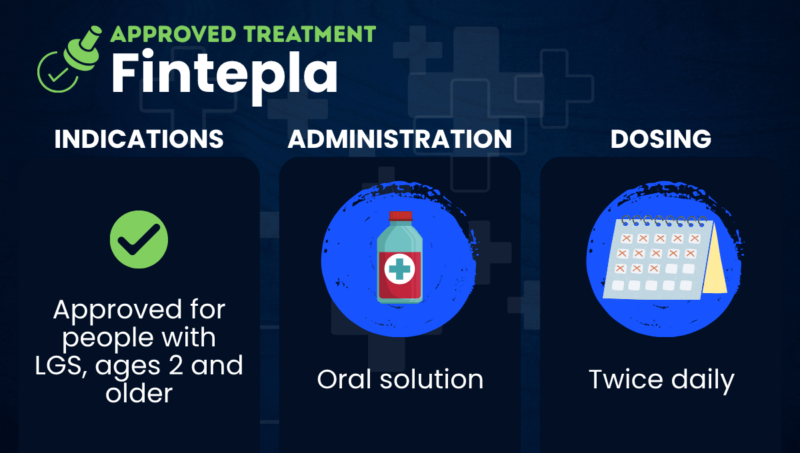
Fintepla is approved in the U.S. for the treatment of seizures in people with LGS, ages 2 and older. It is similarly approved in the European Union.
The medication is contraindicated, or should not be used, by people who:
- have experienced an immune reaction (hypersensitivity) to fenfluramine or any other ingredient in Fintepla
- have taken any monoamine oxidase inhibitor, a class of antidepressants, in the last two weeks, due to the risk of serotonin syndrome, a life-threatening complication in which serotonin levels are too high
Fintepla comes with a boxed warning that it could cause heart valve disease and pulmonary arterial hypertension, a serious cardiovascular condition. For that reason, it is only available in the U.S. through a restricted access program called Fintepla REMS.
How is Fintepla administered in LGS?
Fintepla comes as an oral, cherry-flavored liquid to be taken twice daily, with or without food, using the provided measuring device. It can also be administered through a feeding tube.
The recommended starting dose in LGS is 0.1 mg/kg twice daily, which can be increased weekly based on tolerability to a recommended maintenance dose of 0.35 mg/kg twice daily. The maximum daily dose should not exceed 26 mg.
Dose adjustments are required for people taking the antiseizure medications Diacomit (stiripentol) plus clobazam (sold as Onfi and others). Dose adjustments are recommended for people taking certain other medications, as well as those with severe kidney impairments or any degree of liver dysfunction.
Fintepla in LGS clinical trials
Fintepla’s approval for LGS was supported by a Phase 3 clinical trial (NCT03355209) involving more than 250 people with LGS, ages 2-35. Eligible participants had seizures that were inadequately controlled on at least one antiseizure medication. Each received Fintepla or a placebo daily for 14 weeks, or slightly longer than three months.
The main goal of the trial was to evaluate the median percent change in the monthly frequency of drop seizures, which cause a person to fall. The results showed that:
- the median percent reduction in drop seizure frequency was significantly greater for people who received the now-recommended maintenance dose of Fintepla compared with the placebo (23.7% vs. 8.7%)
- more people on that medication dose achieved a 50% or greater reduction in drop seizure frequency than in the placebo group
- more clinicians and caregivers perceived clinical improvements with Fintepla than with the placebo
Fintepla side effects
The most common side effects of Fintepla in people with LGS include:
- diarrhea
- decreased appetite
- fatigue
- drowsiness
- vomiting
Due to the boxed warning for certain cardiovascular problems, heart ultrasounds (echocardiograms) are required before initiating Fintepla, every six months during treatment, and 3-6 months after the final dose. The benefits and risks of starting or continuing treatment will be considered based on those results.
Fintepla also comes with warnings for other potentially serious adverse events, including:
- appetite and weight loss
- drowsiness, sedation, and lethargy, which could affect the safety of activities such as driving
- suicidal thoughts or behaviors
- serotonin syndrome, especially when used alongside certain other medications
- blood pressure increases
- glaucoma, a group of eye diseases that may lead to vision loss or blindness
Individuals using the medication will be carefully monitored for these side effects. If any occur, Fintepla may need to be discontinued, or the dose adjusted.
Some side effects of Fintepla could be exacerbated when it is used in combination with other medications or substances, including alcohol. Doctors should be aware of all other prescribed or nonprescribed drugs being used.
If Fintepla is discontinued, the dose should be gradually tapered off to minimize the risk of increased seizures and a medical emergency known as status epilepticus.
Lennox-Gastaut Syndrome News is strictly a news and information website about the disease. It does not provide medical advice, diagnosis, or treatment. This content is not intended to be a substitute for professional medical advice, diagnosis, or treatment. Always seek the advice of your physician or other qualified health provider with any questions you may have regarding a medical condition. Never disregard professional medical advice or delay in seeking it because of something you have read on this website.